
The next time the monthly utility bills arrive, resist the urge to write a check or schedule a payment blindly. Take the time for a more in-depth examination. You just might find a way to trim the

Dated: March 23 2023
Views: 250
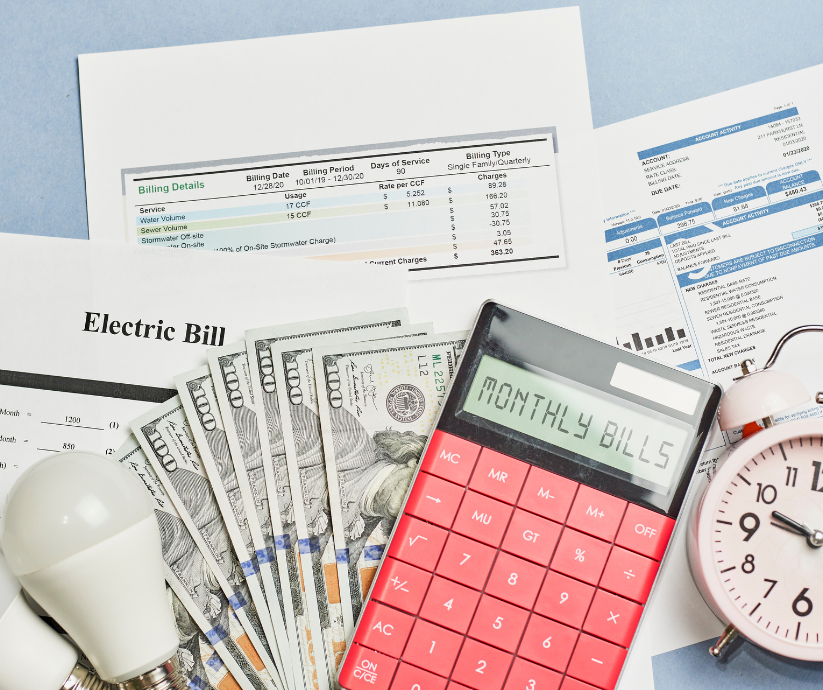
The next time the monthly utility bills arrive, resist the urge to write a check or schedule a payment blindly. Take the time for a more in-depth examination. You just might find a way to trim the bill.
Understanding your electric bill. Using a fixed rate, the power company charges a set rate of x cents per kilowatt hour (kWh) used. The rate doesn’t change, no matter how much or how little power you use. A kilowatt-hour is a unit of measurement to determine how much energy you would use to keep a 1,000-watt appliance running for one hour. So, using a 100-watt light bulb as an example, you could keep it on for 10 hours to use 1 kWh of energy. A large appliance like a washer or refrigerator will generate 1 kWh in a much shorter time frame.
Seasonal or time-of-use rates. Some power companies charge more for use during peak times. A seasonal rate will be more expensive in the winter and summer when the demand for heating and cooling is at its peak. A time-of-use rate is similar in the sense it charges more in the morning and evening when people are presumed to be consuming more energy.
Gas rates are similar. Rates for gas are charged at a per-therm rate. A therm or BTU (British Thermal Unit) is the amount of heat required to raise the temperature of a pound of water by one degree Fahrenheit.
Water and sewage use. The water meter reads usage in gallons. Depending on the area, the water company may have a fixed base fee to help cover infrastructure costs and a variable fee to cover the volume of water your home uses. The less water you use, the smaller your variable fee will be. If you pay for public sewage, those charges will also be a part of your water bill. Sewer fees are based on the wastewater and surface water (mostly rainwater) drainage taken from your home into the public sewer system.
A budget planner. Understanding your bill and knowing precisely what you’ve been charged is a simple way to save money in the long run. Seeing how much gas, water, and electricity you use monthly allows you to budget ahead of time and look for inefficiencies in your systems. If a bill suddenly rises dramatically, an appliance repair or replacement may be necessary.

With having lived over 40 years in the Charlotte metro and upstate South Carolina area, his team of award winning experts have had the honor and privilege of serving thousands of buyers and sellers, i....
The next time the monthly utility bills arrive, resist the urge to write a check or schedule a payment blindly. Take the time for a more in-depth examination. You just might find a way to trim the
Are you looking for a place that can provide the perfect balance between work and family life? Look no further than Charlotte, North Carolina. With its diverse population and great schools, this
An abandoned, decaying house in your neighborhood — also known as a ‘zombie’ house — could mean big trouble for you and your neighbors, especially if you’re planning to
The real estate market in Charlotte, NC is expected to remain strong for the foreseeable future. By 2023, the city will be one of the hottest in the country for both buying and renting.For
 Canopy MLS® Copyright ©2026 All rights reserved.
33. Required DMCA Notice
The Digital Millennium Copyright Act of 1998, 17 U.S.C. §512, the DMCA, provides recourse for copyright owners who believe that material appearing on the Internet infringes their rights under U.S. copyright law. If you believe in good faith that any content or material made available in connection with our website or services infringes your copyright, you (or your agent) may send us a notice requesting that the content or material be removed, or access to it blocked. Notices must be sent in writing by email to DMCAnotice@MLSGrid.com. The DMCA requires that your notice of alleged copyright infringement include the following information: (1) description of the copyrighted work that is the subject of claimed infringement; (2) description of the alleged infringing content and information sufficient to permit us to locate the content; (3) contact information for you, including your address, telephone number and email address; (4) a statement by you that you have a good faith belief that the content in the manner complained of is not authorized by the copyright owner, or its agent, or by the operation of any law; (5) a statement by you, signed under penalty of perjury, that the information in the notification is accurate and that you have the authority to enforce the copyrights that are claimed to be infringed; and (6) a physical or electronic signature of the copyright owner or a person authorized to act on the copyright owners behalf. Failure to include all of the above information may result in the delay of the processing of your complaint.
